


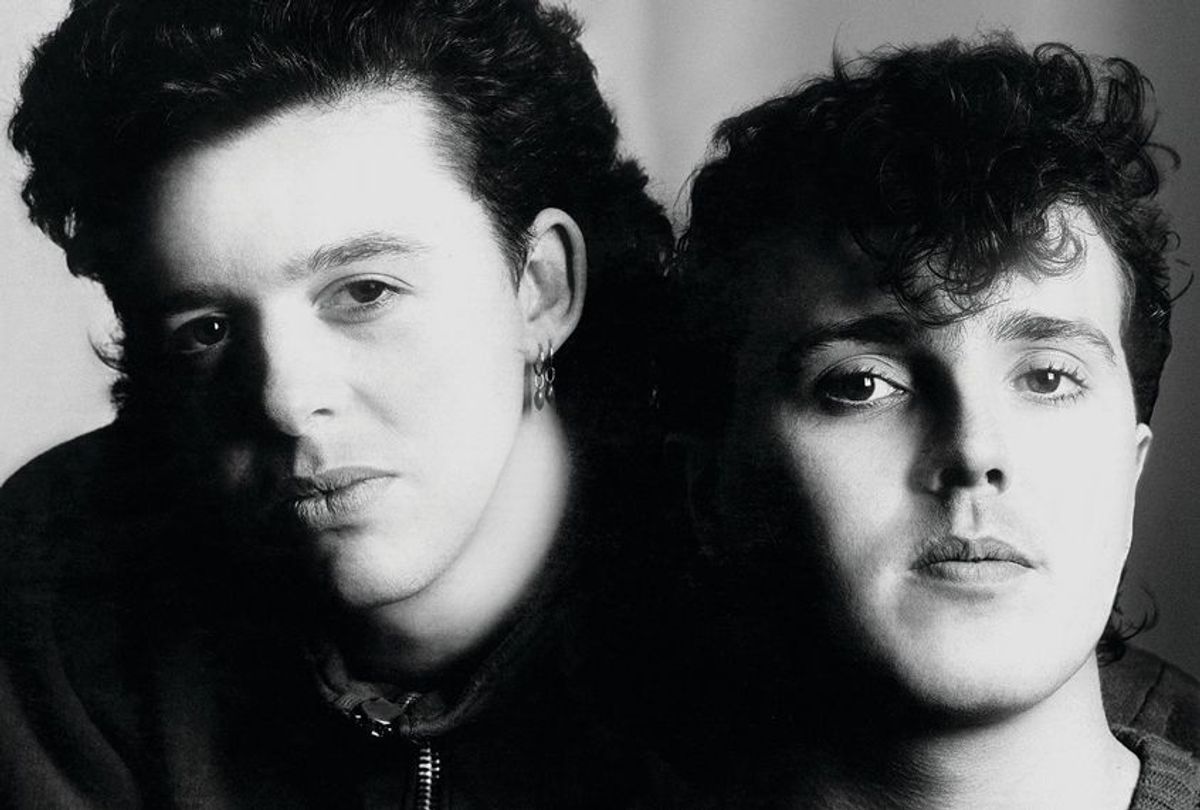
Released in 1985 by the British band Tears for Fears, Everybody Wants to Rule the World remains one of the most iconic songs of the ’80s. With its infectious melody, powerful lyrics and timeless appeal, the track has cemented itself as a staple of pop and new wave music.
The members of Tears for fears, Roland Orzabal and Curt Smith, gained recognition initially for their introspective and melancholic music. The band, formed by Roland Orzabal and Curt Smith, initially gained recognition for their introspective and often melancholic music. However, Everybody Wants to Rule the World marked a shift in their sound, featuring a more upbeat and accessible style, because it was the third single from their second album, Songs from the Big Chair, and quickly became an international hit.
At first hearing, Everybody Wants to Rule the World might seem like a simple anthem about ambition and power, but the lyrics carry a deeper message about political struggles, the consequences of power, and the fleeting nature of control. Lines such as “There’s no turning back” and “Say that you’ll never, never, never, never need it” reflect themes of responsibility and the weight of leadership.
The song was released during the height of the Cold War, a period marked by political tensions and the fear of global conflict. Some listeners see the lyrics as a commentary on the geopolitical landscape of the time, emphasizing the struggles between nations and the desire for dominance.
Musically, the song is characterized by its smooth guitar riffs, infectious synth-driven melody and a chorus. The rhythmic groove and harmonic progressions contribute to its lasting appeal. Produced by Chris Hughes, the track has an airy, open feel that contrasts with the heavier themes in its lyrics.
The song’s impact has been profound, influencing artists across various genres and being featured in numerous films, television shows, and commercials. Its appeal has led to countless covers and reinterpretations, further solidifying its place in music history.
Decades after its release, Everybody Wants to Rule the World remains a beloved song, frequently played on classic hits radio stations and streaming services. It has been covered by numerous artists, including Lorde, who gave the song a darker, more atmospheric twist in 2013.
The song’s relevance persists, as its themes of power and ambition continue to resonate with audiences today. Whether as a nostalgic throwback to the ’80s or as a timeless commentary on human nature, stands as one of the greatest pop anthems. In the modern world, also takes on new layers of meaning, because the themes of power, control, and ambition resonate strongly in an era defined by political shifts, economic uncertainty and the rise of technology-driven influence. The lyrics can be seen as a reflection of the struggles for dominance among world leaders, corporations and even social-media influencers, who wield significant power over public opinion.
The digital age has created new forms of leadership and control, from tech moguls shaping global policies to social movements leveraging on-line platforms for change. In this context, the song remains relevant as a critique of the ever-evolving fight for authority and the consequences that come with it.
Additionally, as discussions around climate change, human rights and global conflicts continue, the song helps as a reminder of the cyclical nature of power struggles and the responsibilities tied to leadership. Whether viewed through a political, social or personal lens, it remains an anthem that speaks to the desires and dilemmas of humanity across generations.
In today’s world, the song’s lyrics can be interpreted as a reflection of modern society’s obsession with control and influence. The rise of social media has shifted power dynamics, making individuals and influencers more powerful than ever in shaping narratives and opinions. Political conflicts, economic crises and global movements highlight how the desire to “rule the world” extends beyond governments to corporations, activists and even on-line communities.
Moreover, the song can be seen as a warning about the dangers of unchecked ambition. As technological advancements, artificial intelligence and global competition accelerate, the struggle for power is more intense than ever. The song’s message serves as a reminder that leadership comes with responsibility and that the pursuit of control often leads to unintended consequences.
Ultimately, Everybody Wants to Rule the World remains relevant because it speaks to a fundamental aspect of human nature: the desire for influence and authority. Whether in the political sphere, business world or digital landscape, the song continues to resonate, proving that its themes are as timeless as ever.
Arianna Rusconi 3C




Rispondi