


ECONOMICS
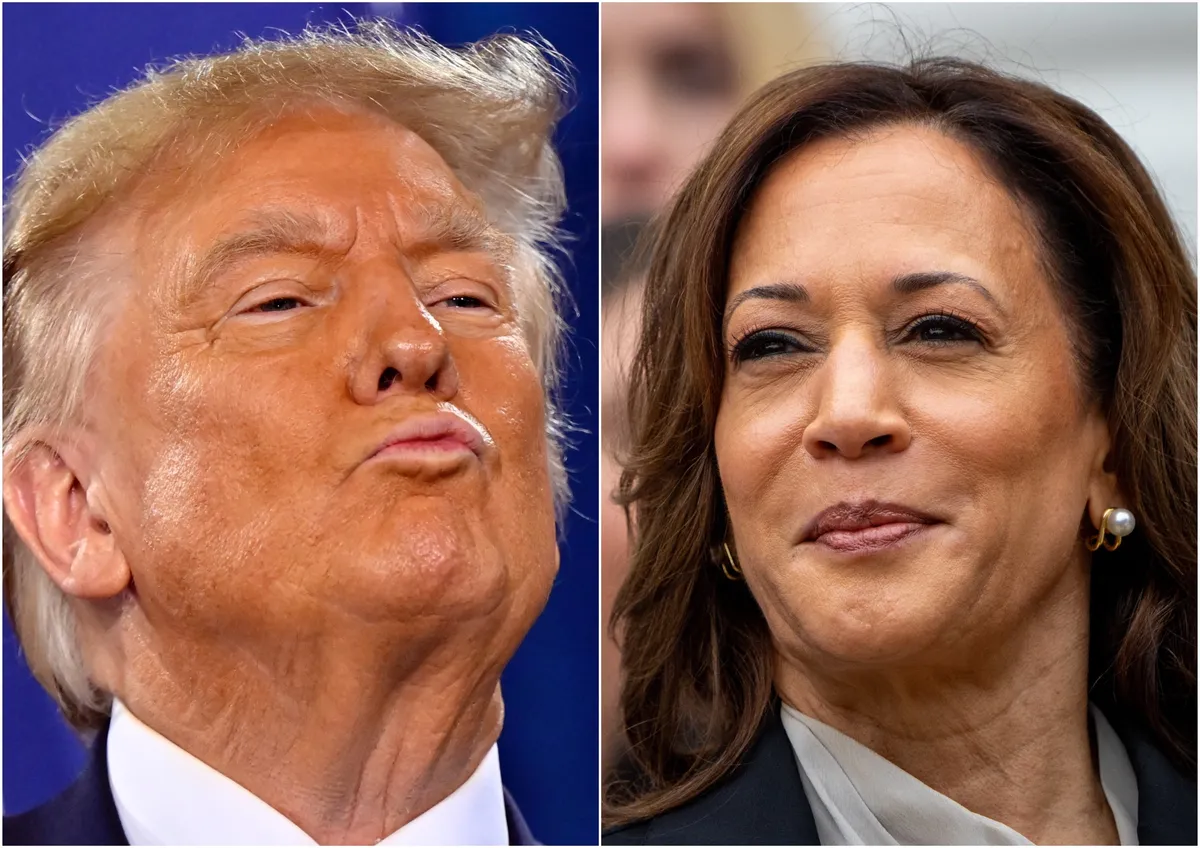
For a long time, the USA has held the N.1 spot on the global ranks for their massive economy, with an annual GDP of 27 Trillion dollars. However in recent years China has been investing a lot in their manufacturing capabilities, and Covid has dealt a hard blow to American industry. As such, the economic plan that each candidate is bringing forth is, maybe, the single most important factor for the voters.
TRUMP’S PROPOSAL
Trump’s policy centers on extending and expanding the 2017 tax cuts on big companies, lowering the corporate tax rate to 15% (corporate tax is how much of a company’s revenue is taken by the State) from the previous 21%, and implementing heavy tariffs to boost U.S. manufacturing and stop the offshoring of jobs to countries like India and China. He also advocates for the capping of credit card interest rates (in the US credit card debt is a very profound issue and is estimated to be around 1.2 trillion dollars) and offering deductions for car loan interests (meaning that buying a car won’t be as expensive as before). His proposal could drive up the national debt by about $7.8 trillion, according to analysts, as particularly the big reduction in taxes would be a significant cut of revenue for the government (for context, in 2022 the corporate tax collected more than 500 billion dollars). The promise of such a big tax cut has caused the billionaire Elon Musk to endorse Trump.
HARRIS’ PROPOSAL
Harris plans to provide middle-class tax relief through, mainly, the doubling of minimum wage nationwide, from 7.25$/hour to 15$. This a long sought after goal for the younger population, as the current wage was first introduced in 2009, making the 2009-2024 15 year span the longest since 1938 without a raise for minimum wage workers. Also in her plan, is to revive and expand child and earned income tax credits (meaning, poorer families will be able to deduct more from their taxes) and raise the corporate tax rate to 28%. She proposed a “billionaire minimum tax” on the ultra-wealthy (in the US the top 400 people have a combined net worth of over 5 trillion dollars) and many policies to prevent price-gouging (the deliberate increase of the price of a product when the market trend does not require to do so, thus damaging the customers only for profit) by large corporations. Her healthcare initiatives extend to more funding to Medicare and the continued support to the Affordable Care Act, the only forms of public healthcare in the United States, where private insurances have almost a monopoly on the market and more often than not charge incredibly high prices for medicine and treatments (for example, insulin, which has a manufacturing cost of 3-6$ per vial, can be found sold at 300$) . Her policies would add an estimated $4 trillion to the national debt over a decade (of presumed continuous application).
The majority of experts agrees that Harris’ plan will be better for the economy, as while Trump makes a lot of good-looking promises for the average folk he is also actively cutting a lot of revenue sources without replacing them.
FOREIGN POLICY
As Vice President under the Biden administration, Kamala Harris supports a foreign policy rooted in alliances, multilateralism, and democratic values. Her approach emphasizes strengthening alliances by building strong military and trade relationships with NATO countries and other traditional allies (Japan, South Korea, Australia, ecc.).
Harris will most likely continue the Biden administration foreign policy: strengthen and expand pre-existing alliances, while supporting Ukraine in its war against Russia through the lend lease of old American stocks of equipment. About the hot topic that is the Gaza situation, Harris has expressed worries about the wellbeing of the civilian population, but still supports Israel in their personal “war on terror”. On immigration and refugee policy, Harris advocates for reform to create legal pathways for migration and address the root causes of migration from Central America, while maximizing the efforts to stop illegal immigration.
In contrast, Donald Trump’s “America First” approach prioritizes U.S. sovereignty, nationalism, and economic interests. His policy favors trade protectionism, often using heavy tariffs, especially against China, to advantage U.S. industries. Trump displayed heavy criticism of alliances, frequently criticizing NATO and urging allies to increase their defense spending, and even went as far as saying that if re-elected he’ll make the US quit NATO. It isn’t completely unrealistic of him to do so, as he already quit various international initiatives back in his first 2016-2020 term, such as the Paris Climate Accord and the Iran Nuclear Deal, viewing them as disadvantageous to the U.S. His immigration policy focused on strict border control and limiting refugee admissions to prioritize national security, as well as what he defined will be the “biggest deportation” in US history, targeting the “over 20 million” illegal residents in the US. The number of actual illegal “aliens” is however estimated to be around 12 million, so it’s unclear what other groups of people will be hit. The ex-president also said that, under a new Trump administration, he will give the green light to Israel to do whatever it wants with Gaza, almost certainly sealing the fate of the city as a new Israeli territory. Following the same line of toughts, Trump has multiple times stated that, when he’ll reutrn as president, all aid to Ukraine will stop and that Russia actually is right in the conflict.
INTERNAL AFFAIRS
Kamala’s always been a very strong supporter of LGBTQ+ rights, ever since she was just a senator. As California’s Attorney General, she backed marriage equality and anti-discrimination laws, and she currently continues to advocate for these issues as Vice President. Harris supports the Equality Act to protect LGBTQ+ individuals in housing, employment, and public spaces, and has promoted healthcare access and protections for trans people, including gender-affirming care and the right to serve in the military. She has also long supported Roe Wade, the Supreme Court ruling that guaranteed the right to an abortion. She expressed deep concern when it was overturned in 2022, viewing it as a significant setback for women’s rights, and it isn’t too wild to imagine that, if president, she will reinstate the right to abortion nationwide.
Trump is on the complete opposite end of the spectrum. He is a strong opponent to abortion, particularly since he ran for president in 2016. He appointed three conservative Supreme Court justices, who helped overturn Roe Wade in 2022. Since the decision, Trump has taken credit for empowering states to restrict or ban abortion, but does not support a federal abortion ban, which some more extreme Republicans advocate for. He is also anti-trans, and argues for more limits or straight up bans on surgeries, especially on minors. He also made quite a few statements about public schools turning children trans and gay, and on Puertoricans (a very big minority in the US) eating dogs and cats. Last but not least, his ideas include closing the Department of Education and let each state handle it on a private matter (and thus more conservative state could teach things like the Bible in school, which would go against federal guidelines).
According to polls (which in the past have been shown to be quite inaccurate), Harris and Trump are currently tied, with a few key states that could go to either.
Of course, these is in no way a complete guide on the 2024 Presidential election. For more info you can look on these sites:
https://edition.cnn.com/2024/10/27/politics/economy-harris-trump-proposals-taxes/index.html
https://edition.cnn.com/interactive/2024/politics/presidential-candidates-dg/
Andrea Campoli 3C




Rispondi